


 Horses

 Cattle & Cows

 Sheep & Goats

 Pigs
Pigs

 Dogs & Cats

 Poultry

 Small animals

 Wildlife defence

 Wolf defence
How do you set up a chicken coop properly?
Keeping your own chickens is a wonderful thing: children and adults alike enjoy it, it is not overly demanding, and you are rewarded with fresh eggs every day. Nevertheless, there are a few things to keep in mind when setting up a chicken coop so that you can offer your new feathered friends a lovely home. In the following article, we show you how to set up your chicken coop properly.
Contents
- How big should a chicken coop be?
- Which location is best for my chicken coop?
- How can I make the coop safe for my chickens?
- Which type of chicken coop is best for you and your chickens?
- What should not be missing from a chicken coop?
- Which outdoor area should you choose?
- How should the outdoor area be set up?
How big should a chicken coop be?
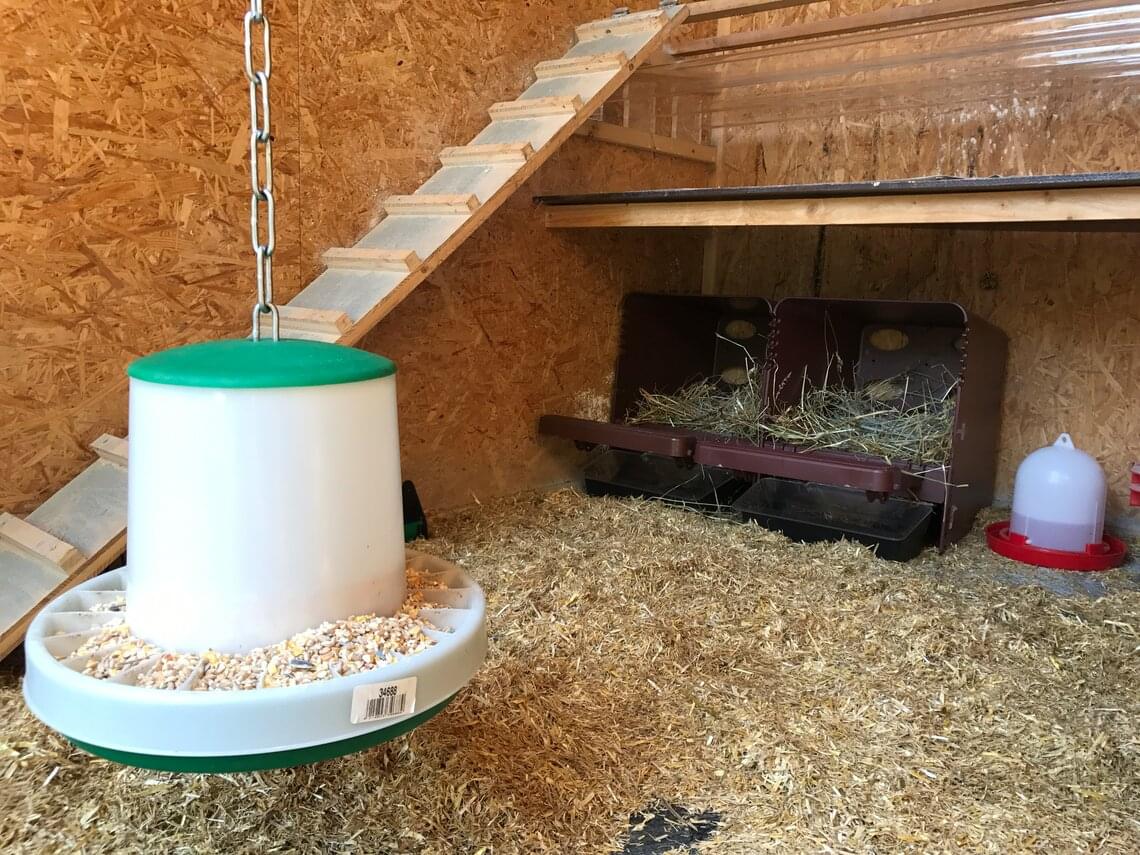
A good rule of thumb for keeping your chickens in a species-appropriate way is that a maximum of 3 chickens or 5 bantam chickens should be kept on one square metre of coop floor space. The outdoor area should be as large as possible, or at least around 5–10 square metres per chicken. At night, chickens like to retreat to perches. Give your birds plenty of space here—around one metre for 3 chickens—to avoid squabbles. Nesting boxes provide a place where your hens can lay their eggs undisturbed. The German Animal Welfare and Farm Animal Husbandry Ordinance stipulates that at least one nesting box must be available for every seven hens.
In addition, we recommend a coop height of at least 1.80 m so that you can stand upright. This makes cleaning and feeding much easier. The nesting boxes should either be easily accessible from the inside or be openable from the outside via a flap.
Which location is best for my chicken coop?
If you are looking for the perfect chicken coop, it is important to think about where it should be placed. There are three perspectives and needs to consider here: first and foremost those of your chickens, but those of your neighbours and of you as the chicken keeper should not be forgotten either.
The location of the chicken coop should be carefully planned. Not only the free-range options need to be considered, but above all the lighting conditions so that enough light is available in the coop. The windows of the chicken coop should ideally face south or east. This way your chickens get enough light and the sun can warm the coop in winter. In summer, a shady spot under a tree is recommended so that the heat is somewhat reduced. Good insulation of the chicken coop helps to maintain a good indoor climate.
The location of the coop must also be easily accessible. You should also not place the coop too close to your neighbour’s fence and should inform your neighbours about your plans in advance to avoid tension.
How can I make the coop safe for my chickens?
Keeping chickens as pets has become increasingly popular in recent years. But martens, foxes and other predators are also interested in our feathered friends. It is our job to protect our chickens from these predators.
When building or buying your coop, look for a solid roof, secure walls and a sturdy door. If the coop has windows, they should also be lockable.
The coop should be well ventilated to ensure good air circulation. An automatic chicken flap provides more convenience and improves animal welfare by opening automatically every morning and closing again at sunset.
The outdoor run must also be protected against intruders. The fencing should therefore be free of gaps. An electrifiable net can be used both to deter predators and to keep the chickens securely contained.
Which type of chicken coop is best for you and your chickens?
Small coop
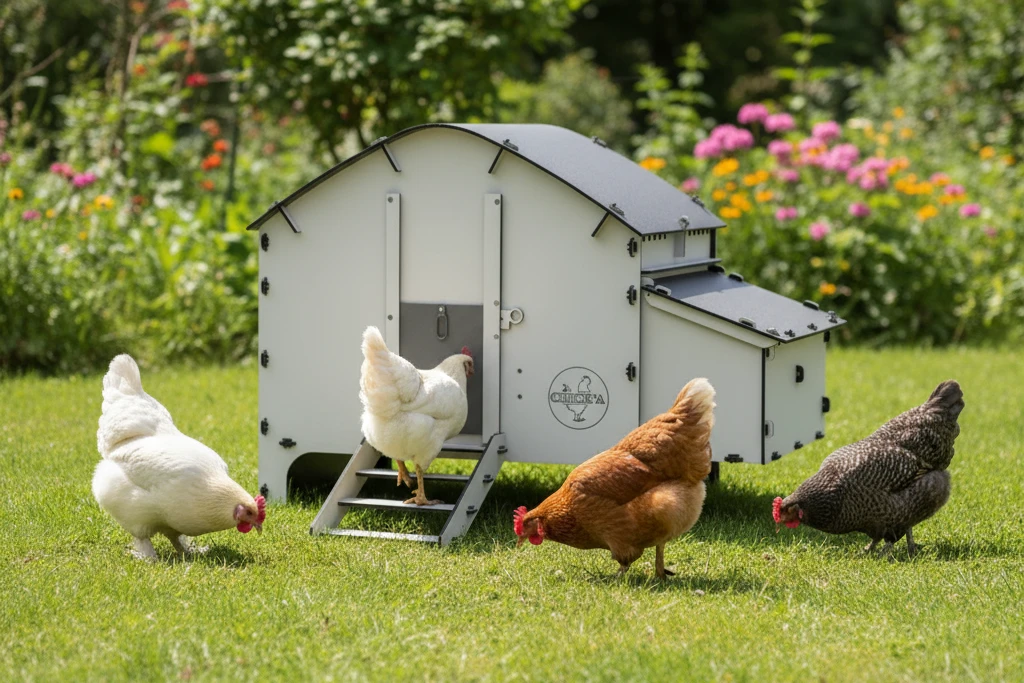
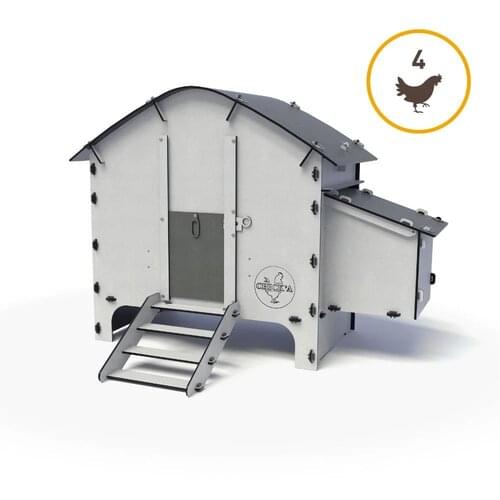
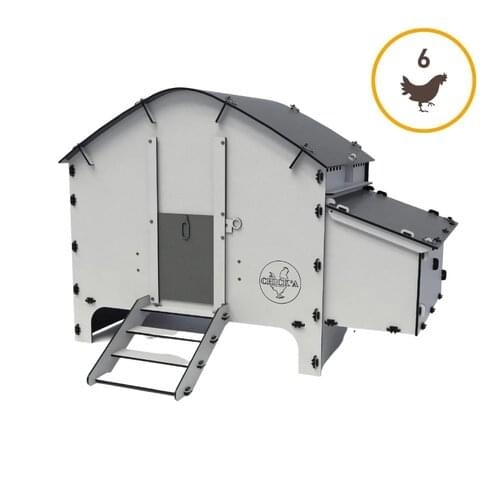
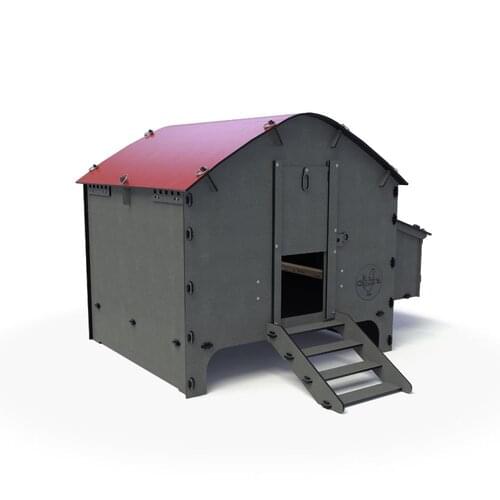
Small coops are well suited for keeping four to a maximum of eight chickens. They have the advantage of being easy to assemble, inexpensive and mobile. Their low weight means they can be moved around the garden with ease.
Mobile chicken coop
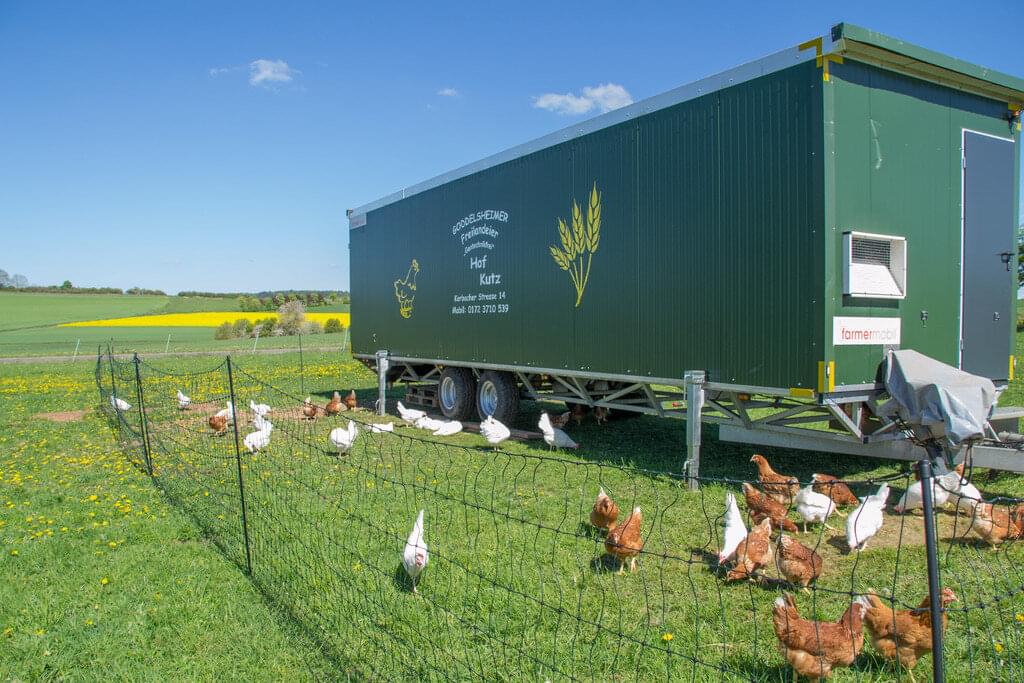
With a mobile chicken coop on wheels, your chickens can easily be moved regularly around your garden or onto a meadow. So-called rotational grazing protects your turf and ensures your chickens always have fresh grass.
Chicken coop with covered run / aviary
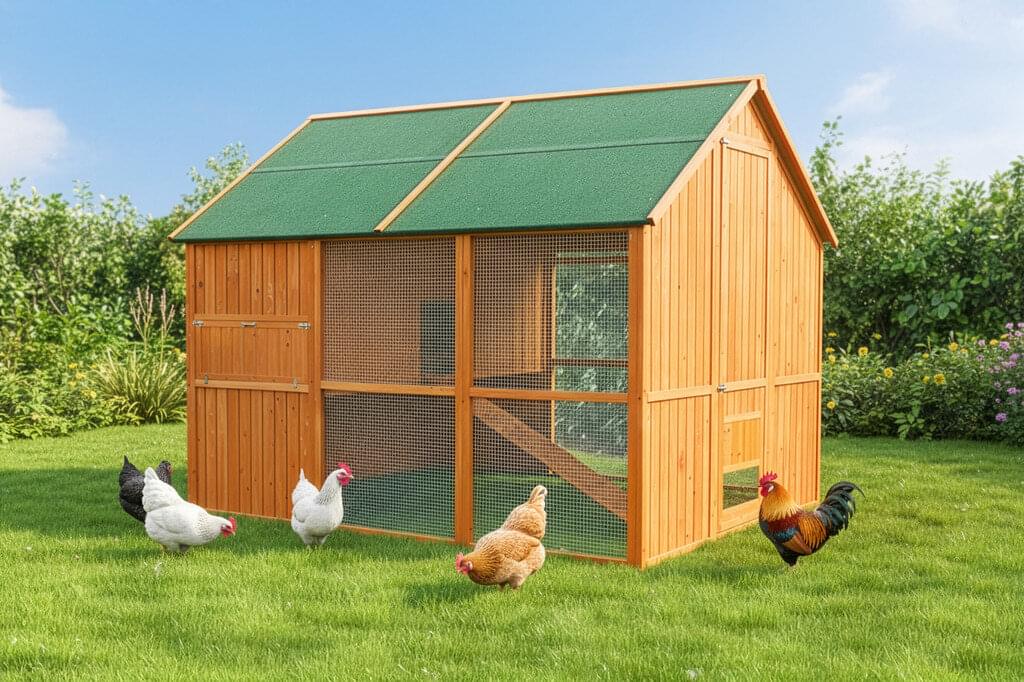
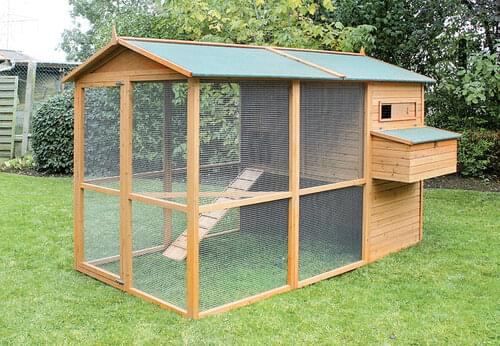
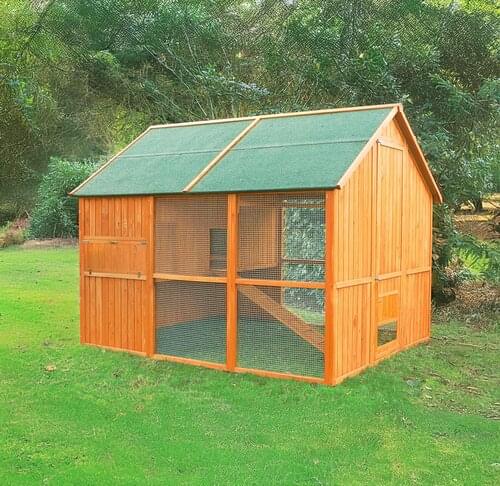
A run with a roof is useful in bad weather. Here, your chickens have a protected place. This secure outdoor climate area also meets the regulations when an authority imposes a housing order—for example due to an animal disease outbreak.
Our recommendations
What should not be missing from a chicken coop?
For your chickens’ well-being, a few points should be taken into account. The following tips can help:
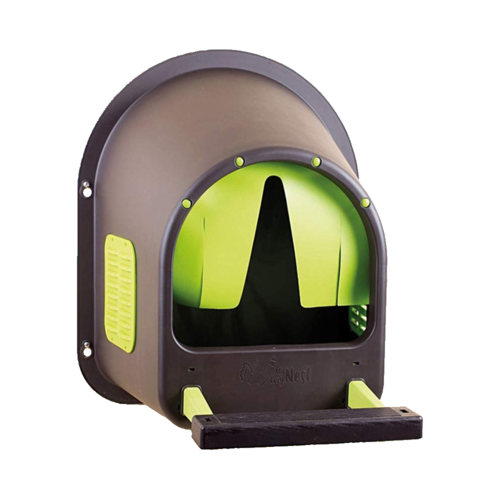
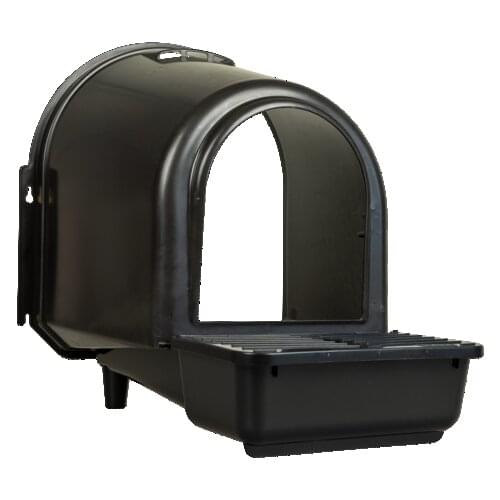
Nesting boxes
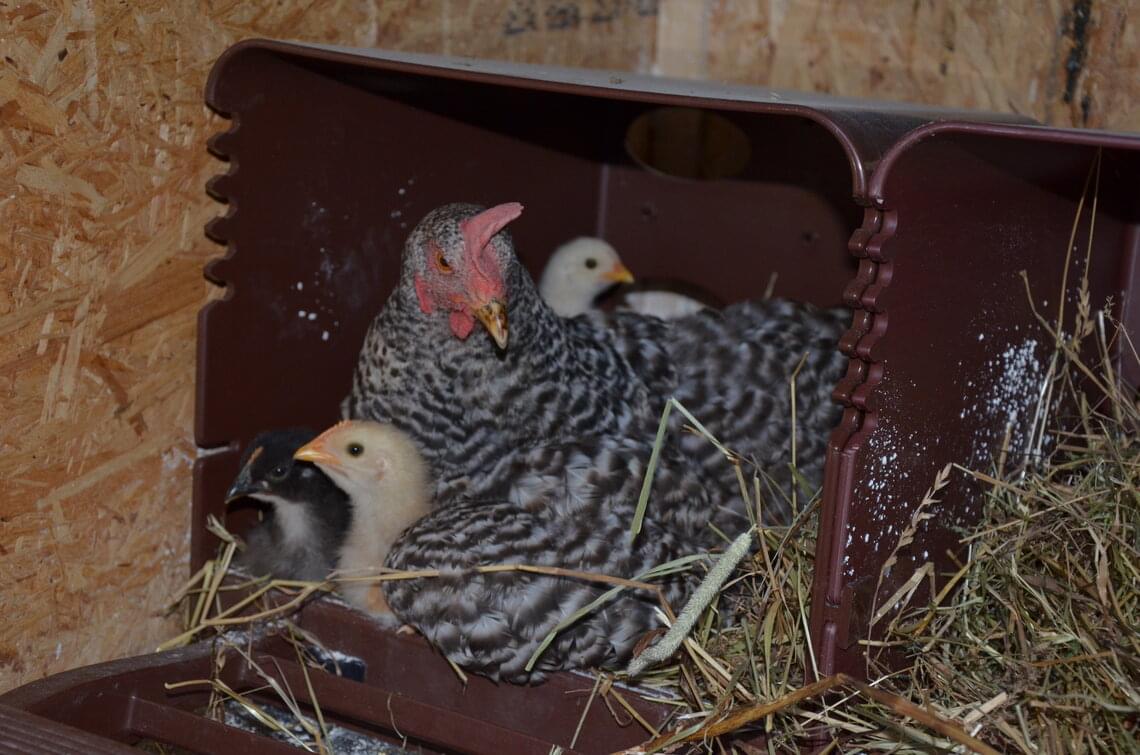
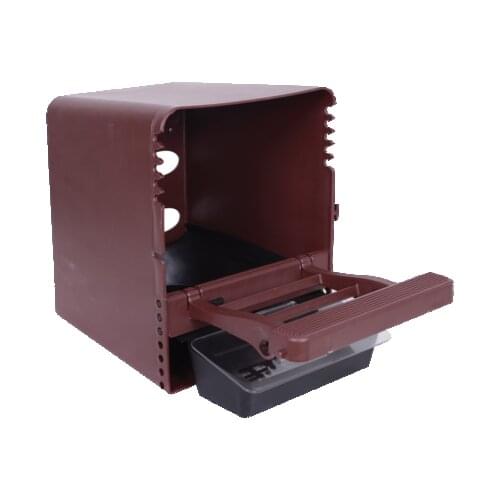
Chickens prefer to lay their eggs in an undisturbed and quiet place. Nesting boxes offer exactly such an environment and also protect the eggs from breakage and dirt. The laid eggs can then be removed from the nest without any problems. A mixture of straw and sawdust is ideal as bedding. Plastic nesting boxes are easy to clean.
Dummy eggs help to stimulate your chickens’ nesting instinct. The eggs are placed in the nesting box, which helps establish the laying location.
Important: The German Animal Welfare and Farm Animal Husbandry Ordinance stipulates that at least one nesting box must be available for every seven hens.
Our recommendations
Perches
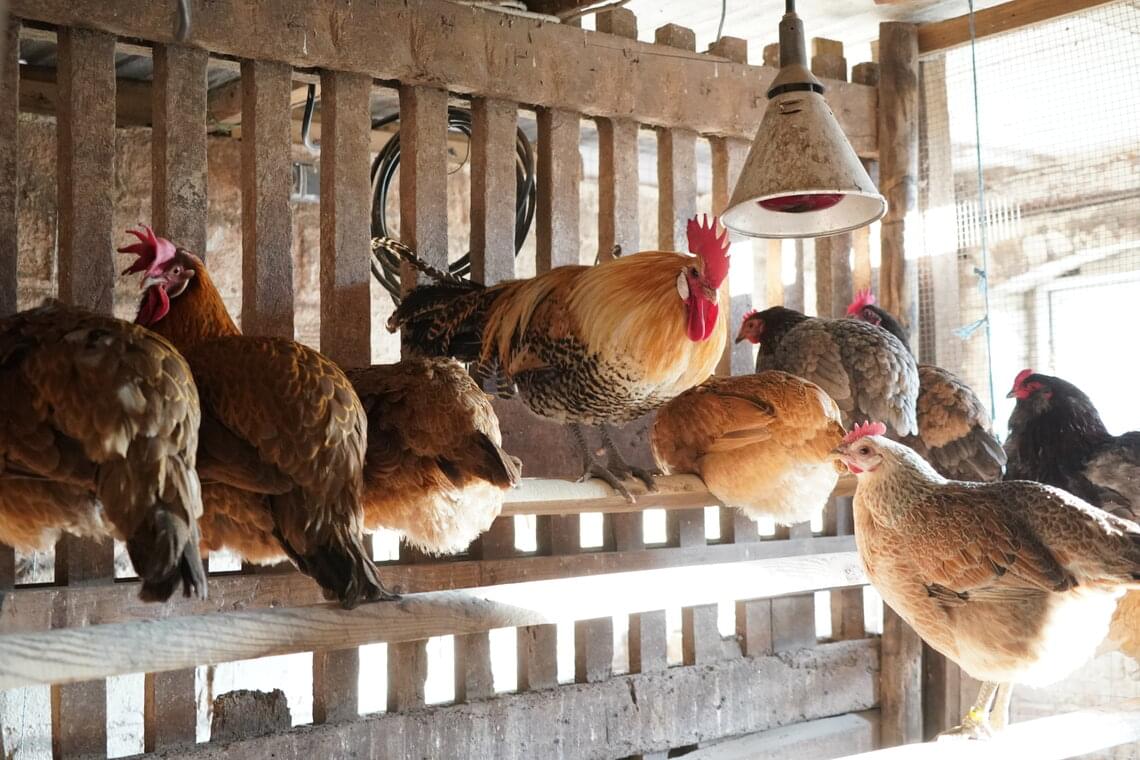
Chickens like to roost on perches at night. This is a remnant of their evolution: the ancestors of our domestic chickens used to seek protection from predators on higher branches at night. The highest-ranking hen was on the highest branch—the safest one. To prevent possible rank fights in which the pecking order is established, the perches should all be installed at the same height.
For heavier chicken breeds, it is advisable to install a chicken ladder to make it easier for the animals to climb up.
Droppings board
A droppings board is a board mounted beneath the perch that catches the chickens’ droppings and thus prevents the bedding from becoming heavily soiled too quickly. Droppings boards are available in various designs and can either be built yourself or purchased from specialist retailers. They are usually made of wood or aluminium.
- Many chicken keepers prefer aluminium droppings boards because they are easy to clean and lightweight.
- Wooden boards, on the other hand, require more intensive cleaning because droppings can settle in the pores. However, replacing them is inexpensive.
Dust bath
Poultry have delicate plumage that is susceptible to mites and other pests. Accordingly, coop hygiene is important. Chickens clean themselves. Simply provide them with a dust bath with low side walls (10–15 cm) filled with play sand or quartz sand. The size can be adapted individually, but at least two chickens should be able to fit in the dust bath.
Make sure the sand is always dry and clean, and place it at a sufficient distance from the feeding area.
Feeding area
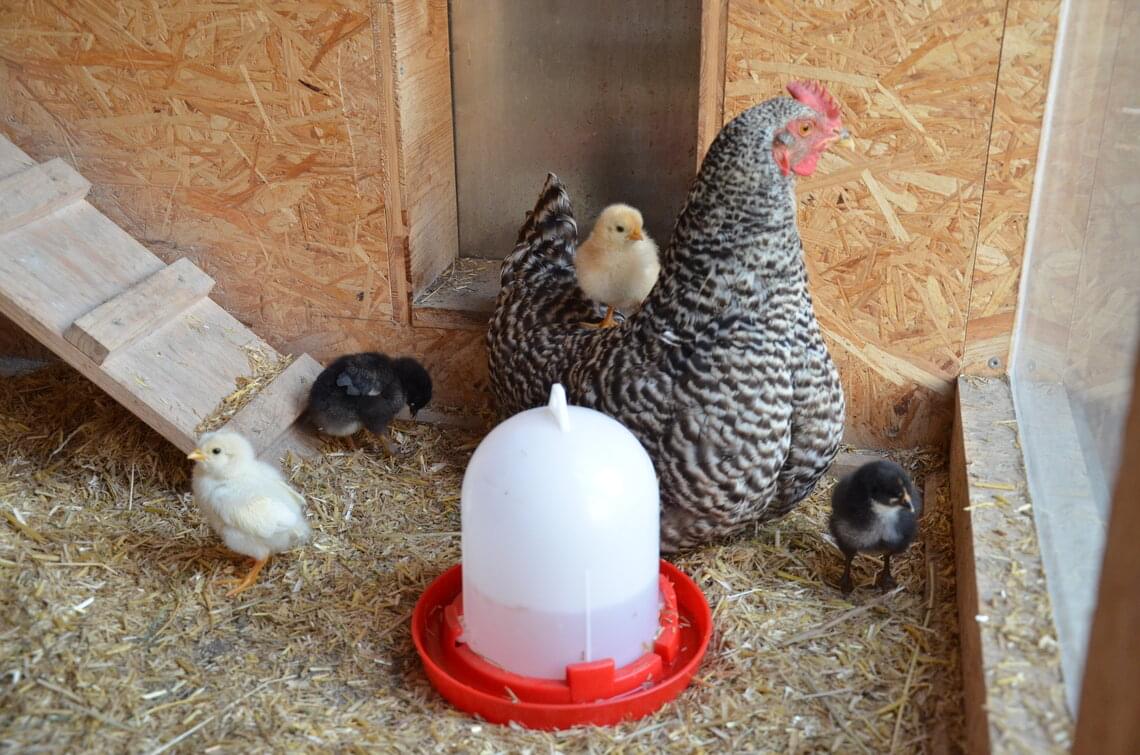
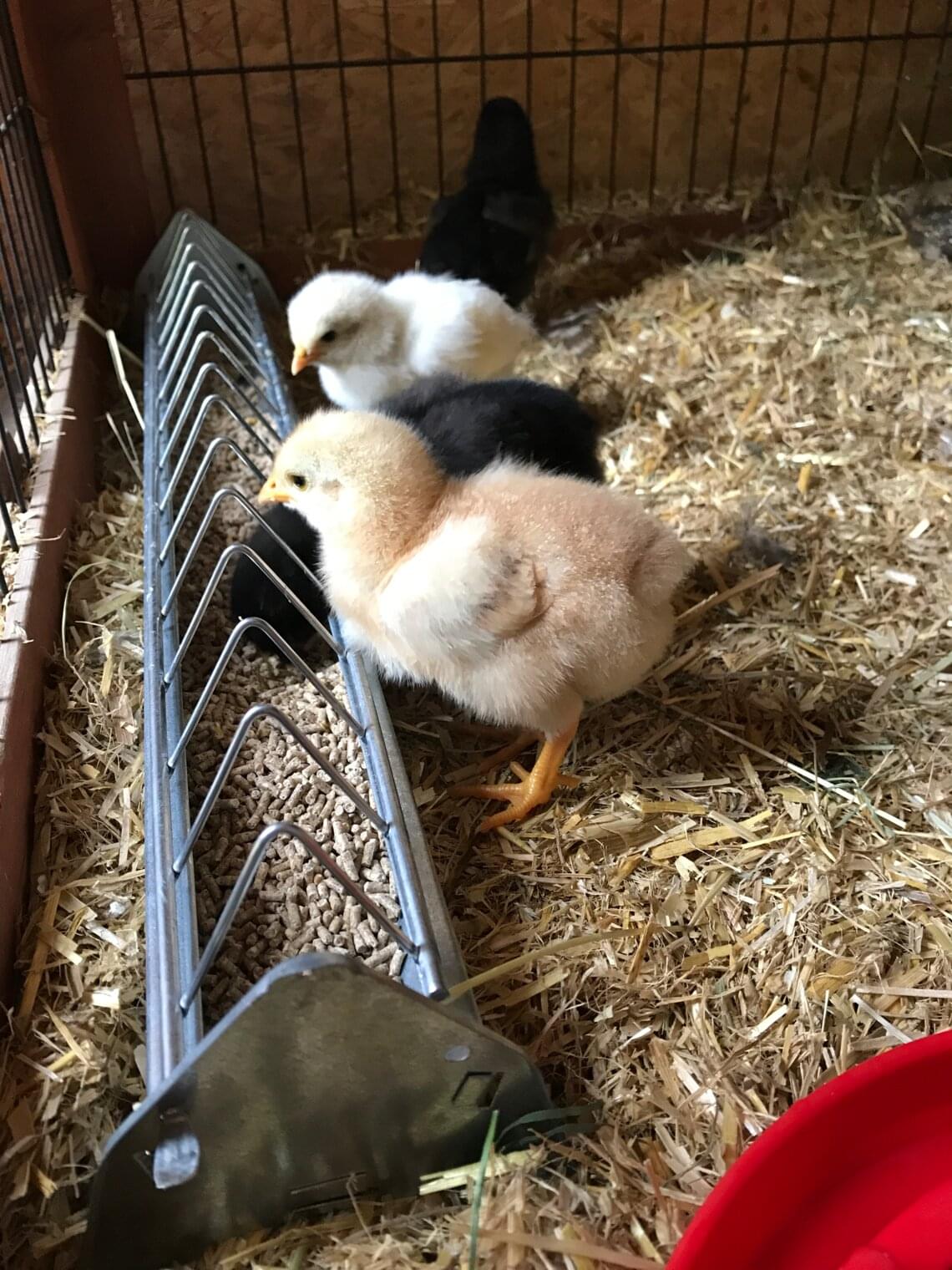
Proper feeding is essential in every chicken coop. Drinkers and feeders should be placed together in a separate feeding area where the animals have free access.
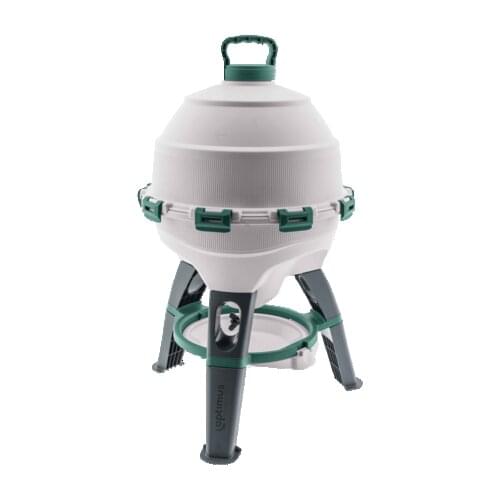
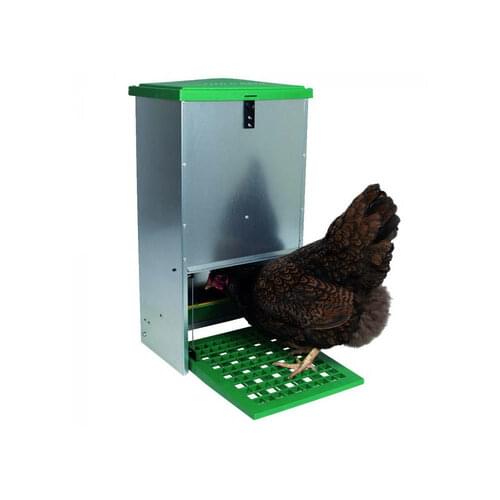
Rodents in particular may also help themselves to the chickens’ feed. To prevent this, a closed feeder, such as an automatic feeder, is advisable. It has a larger capacity on the one hand and automatically replenishes fresh feed on the other. Automatic feeders with a treadle flap are even safer.
Lighting
There should always be enough light in the chicken coop so that the animals feel comfortable. Normally, natural light is completely sufficient. In winter, additional lighting with a timer is useful to compensate for the limited daylight. A light output of around 3 W per square metre should be planned, and the light source should not hang lower than 1.5 m. A chicken should have 14 hours of light per day.
Bedding
A solid floor in the coop is important so that the chickens can move around without any problems. When choosing bedding, make sure it absorbs the animals’ droppings. Regularly changing the bedding is therefore important to prevent mites and disease.
The following materials are generally suitable as bedding:
- Sawdust
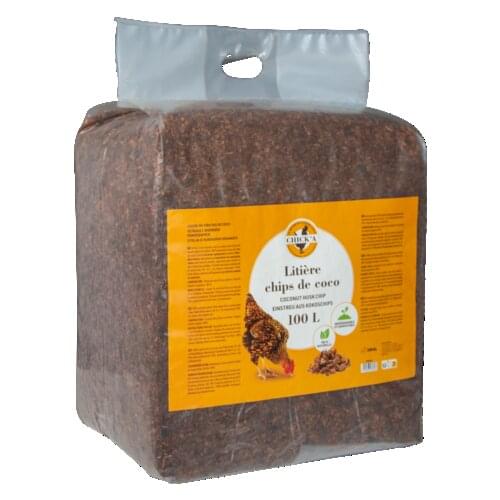
- Coconut chips
- Straw (chopped)
- Hay
- Dried grass clippings
Which outdoor area should you choose?
Free range
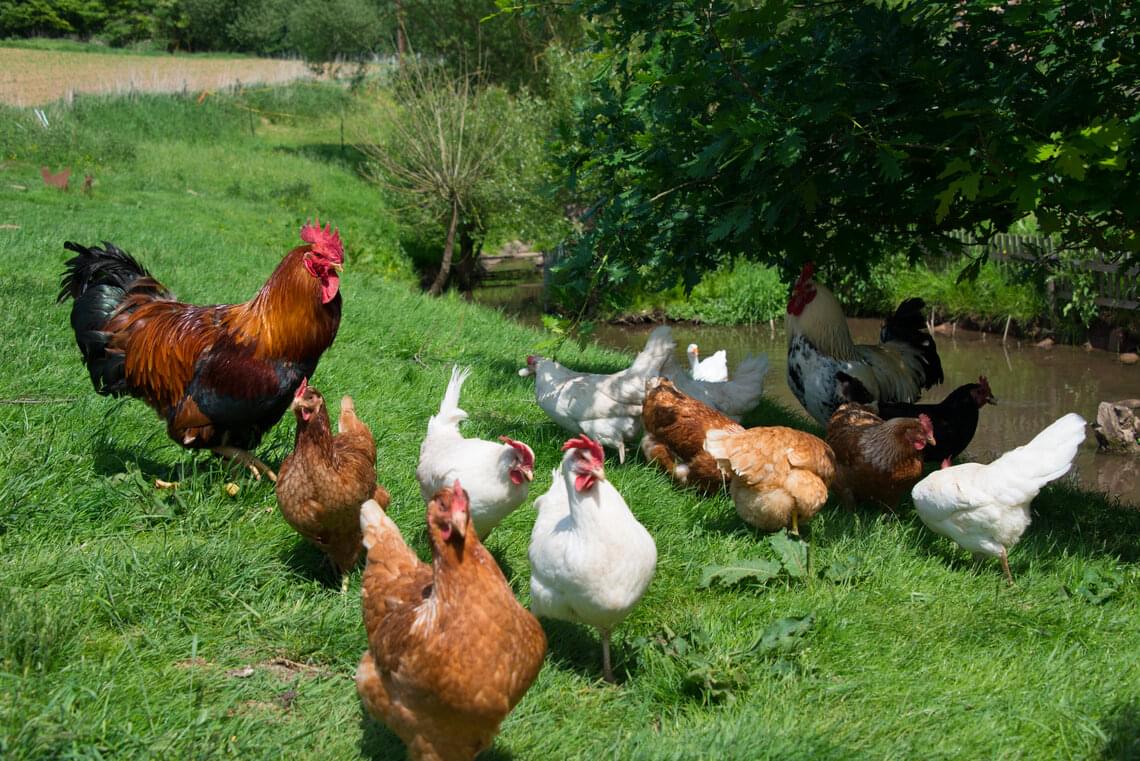
Away from busy roads and in rural areas, chickens can enjoy free range under the right conditions. Once the animals have become accustomed to life outdoors, they return to the chicken coop on their own in the evening. The downside is that the animals are unprotected from predators and can also cause damage themselves by scratching.
Permanent fencing
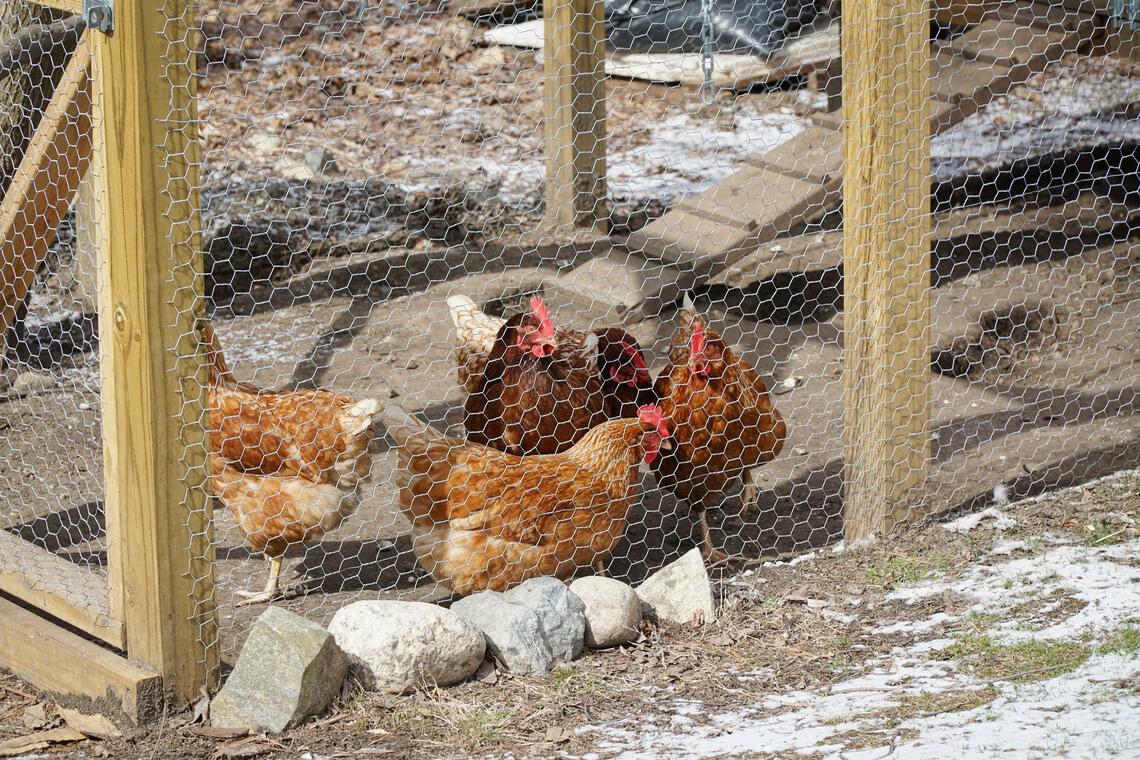
Permanent fencing is widespread. Here, an area is permanently fenced off. It is important to ensure that the area is large enough for the number of animals, which will eat the vegetation and scratch up the ground.
Mobile fencing
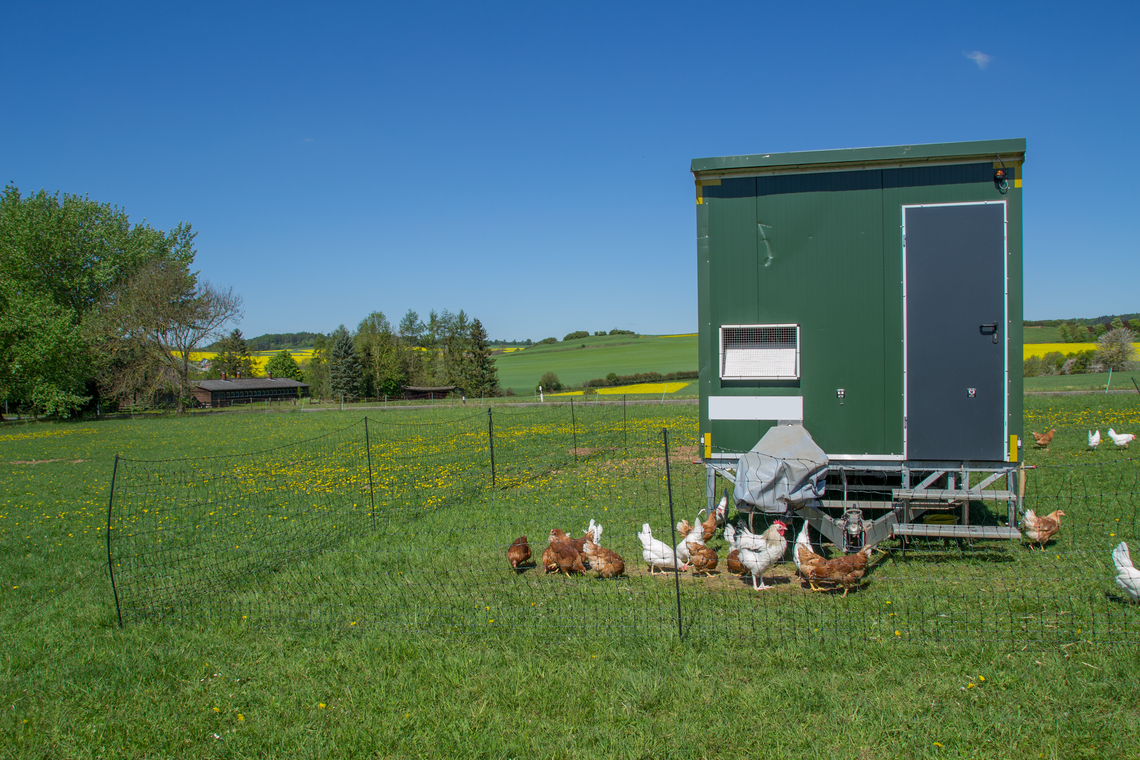
A mobile fence has the advantage that the chickens can regularly roam on fresh grass. This also helps protect the turf. An electrifiable net reliably ensures that the animals stay within the fenced area.
How should the outdoor area be set up?
The outdoor area should have several shelter options where the chickens can find protection from weather and sunlight, as well as hiding places from birds of prey or quarrelsome flock mates. If the run is sparsely planted and offers no natural shelter, these should be added later.
Examples include:
- Old wooden benches
- Small tables
- Old compost bins
- Pallet hideaways